

8 reasons why ‘Optimization Algorithms’ don't work for dating apps
The fundamental disconnect between matching algorithms and human nature

The ‘secret sauce’ behind all dating apps are their matching algorithms. The more you swipe, the better the algorithm gets at predicting what kind of people you’d like to match with, itself a proxy for perceived ‘compatibility’.
The issue is that this kind of approach to ‘optimization’ — improved user outcomes through training an algorithm— ignore fundamental tenants of psychology and cognitive science. (And no, not just paradox of choice or addictive behavior.)

Why ‘Optimization algorithms’ work for shoe shopping but not dating
The kind of optimization algorithms that dating apps use work well for solving certain kinds of human problems, like shopping for shoes, but are actually counterproductive dating. Here’s why:
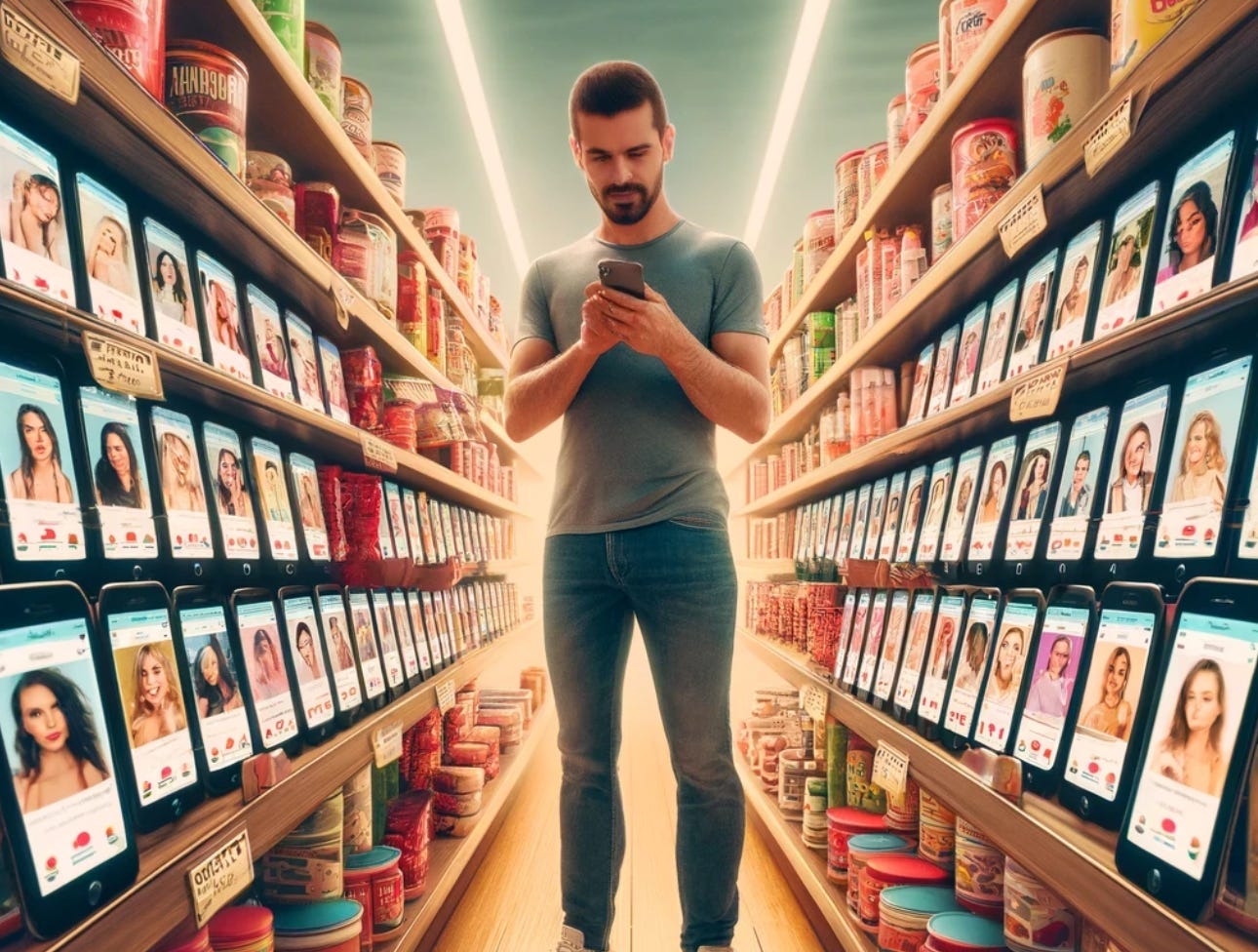
Mutual swiping doesn’t map to relationship compatibility: Dating apps don’t actually measure dates. Not number of dates, quality of dates, number of follow-up dates, nothing. All they do is try to predict mutual swiping, not so different from how Netflix recommends shows. Apps do this because there’s a much larger volume of swiping data than actual dates. (it’s also addictive, which the apps like).
Unfortunately, mutual swiping involves far too many flawed factors (limited, misleading, or inaccurate profiles, swiping addiction, over-indexing on common interests, inaccurate self-perception, etc.). Besides, compatibility can’t be predicted before people meet. Swiping is just the wrong thing to measure.Subscribed
Perfect match fallacy: Users of dating apps who think they’ll stumble across their ‘perfect match’ assume that ‘perfect match’ means instant spark, effortless connection, etc. But an ‘instant spark’ can actually be a red flag. So, unlike with trying on a shoe that instantly fits (or doesn’t), people tend to be bad judges of relationship fit from first meeting. The misalignment is pretty obvious with matching algorithms, which require consistent and recurring input compared on equal footing.
Relationships are built and not found. If you expect a relationship to be effortless when you find ‘the one’, you’ll never be flexible and growth-oriented enough to make love happen. Relationships aren’t like Cinderella’s glass slipper— they don’t just ‘fit’.
The growth oriented model of relationships maps with research that shows that the best predictors of relationship outcome are your own personal traits, like communication skills and self-efficacy. Obviously, no matching algorithm will ever tell you to work on yourself first.Perfect is the enemy of ‘good enough’: Optimization algorithms are for ‘best possible outcome’. The problem is that by their design, dating apps, and the philosophy of ‘optimization’ divert users from the outcome-oriented more fruitful user journey of ‘good enough’, which comprises investing in a nascent connection while ignoring new possibilities.
If you’re on a dating app, you’ve probably swiped on hundreds of people you could have built a fulfilling, wonderful, life-long relationship with. If only your mindset was different, and if only you could assume so of your matches.
Irrational actors: Optimization algorithms are premised on an understanding of humans as only making rational decisions. This imaginary ‘rational’ Hinge user has some equation running in their head that balances time spent swiping with outcome quality, and has a built-in heuristic for evaluating every match. But dating is such a personal, vulnerable, important user journey you can’t approach it with the same pragmatism as shopping for shoes.
As any decent UX Researcher will tell you, humans are fundamentally not rational. (This is ESPECIALLY true for those humans who claim to be rational).
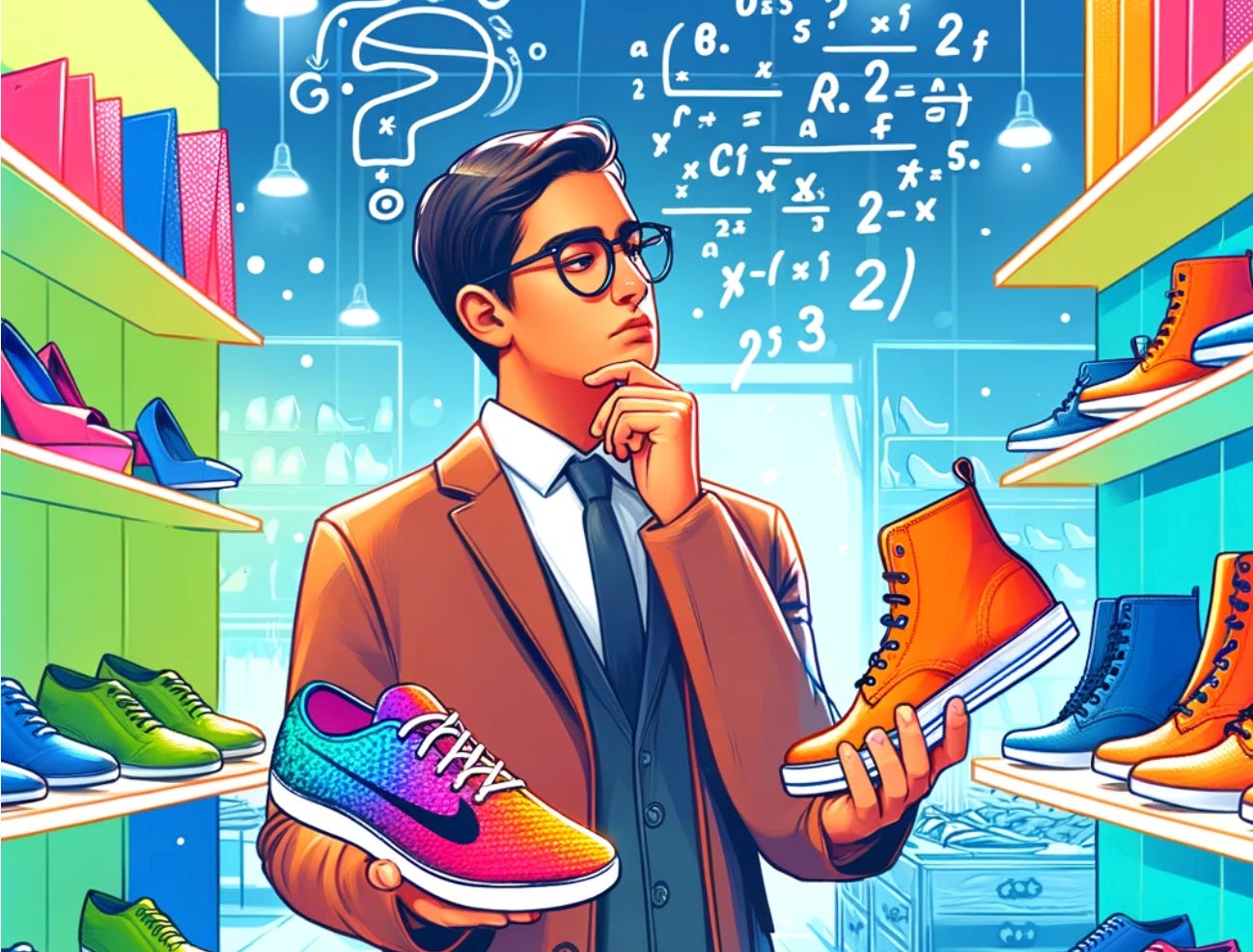
2 way street: Obviously, shoes never say no to you. If you’re shopping for shoes, it makes sense to be as picky as possible. But when dating, this ‘not settling’ mindset is fundamentally flawed. If you only want to date supermodels, you’re then expecting supermodels to settle for you. Tick tock.
Swiping changes you: The more you use a swiping app, the more your brain orients towards comparison instead of connection; in fact, the more you use a dating app, the less likely you’ll want to go on a date with a new person. This is called the ‘rejection mindset’. This is, unsurprisingly, related to paradox of choice.
You’re 27% less likely to swipe on a person if they show up last than first. This helps explain why, despite a far greater access to potential mates via dating apps than ever before, people are more likely to be single.Game theory exacerbates game mechanics: Not only do dating app users become more choosy and less open to connection with each swipe, but they anticipate these same traits in others. Daters on dating apps anticipate judgmentalism and an ‘instant results’ mindset in others, leading to them becoming more pessimistic about their own matches.
Conclusion: So what’s a better approach?
Hopefully, all the reasons above have swayed you. You now believe (as you already did, probably), that dating apps are kind of crap. And they’re crap because of how they fundamentally work: match optimization algorithms.
Before we jump into solutioning, it’s important to see the problem for what it is: a problem of vision.
Most people see ‘swiping apps’ and ‘dating apps’ as one in the same. Most people can’t imagine a dating app without profiles, swiping, paradox of choice, the whole lot. But as we mentioned before, ‘dating apps’ don’t actually measure dates. They track swipes. Swiping is addictive, and this addictiveness makes money for dating apps by selling monthly/weekly memberships. A better, outcome-oriented dating app wouldn’t be addictive, wouldn’t sell monthly memberships, and wouldn’t just track swiping- it would track dates.
A dating app needs to track dates to actually understand compatibility, communication, and attraction beyond the screen, probably by getting feedback from users after each date.
I have a lot more thoughts on the matter, but this is a good place to start.